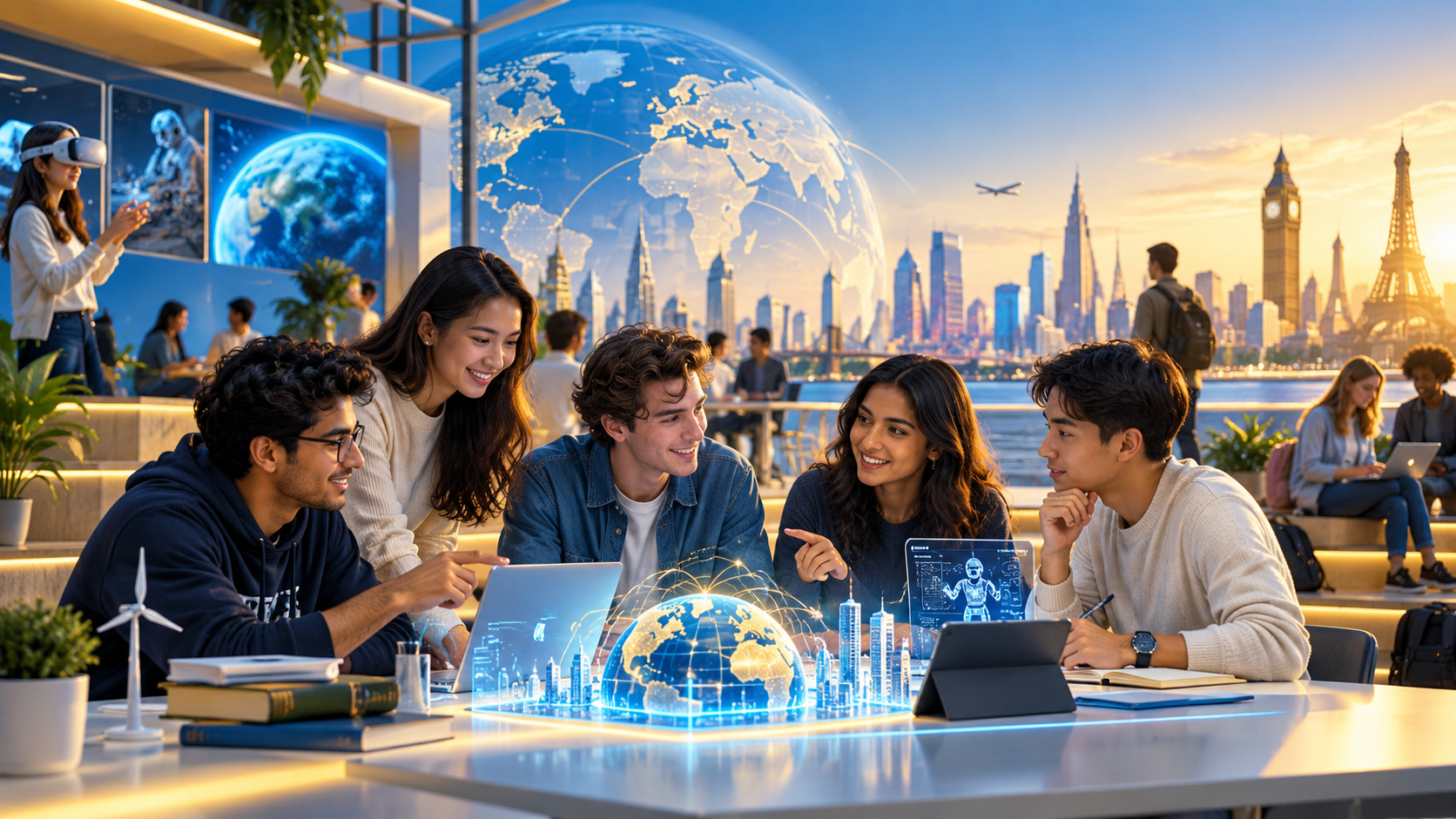
The future of work is difficult to predict in detail, but one thing is clear: people will need to keep learning as technologies, industries, and communities evolve.
Students therefore need more than subject knowledge alone. They need the confidence and capabilities to apply what they know, work with others, and adapt when familiar answers no longer fit.
Critical Thinking and Problem-Solving
Information is easier to access than ever, but access is not the same as understanding.
Students need to question sources, compare evidence, identify assumptions, and evaluate possible solutions.
Teachers can build these skills through real-world case studies, open-ended assignments, and classroom discussions.
Such activities encourage students to explain their reasoning rather than simply memorise information.
Communication and Collaboration
Strong ideas have limited impact if people cannot communicate them clearly.
Writing, speaking, listening, and presenting are important across academic and professional environments.
Students should also learn how to collaborate respectfully with people who have different perspectives and experiences.
Group projects can strengthen these abilities when responsibilities are clear and participation is encouraged.
International projects can offer additional experience in communicating across cultures.
Digital and AI Literacy
Digital literacy involves more than knowing how to operate devices and applications.
Students should understand how to search effectively, evaluate online information, protect personal data, and use technology responsibly.
Artificial intelligence is becoming more common in educational and professional settings.
Learners need to recognise that AI-generated information may contain mistakes and requires verification.
They should develop the confidence to use technology while retaining independent judgement.
Creativity, Initiative, and Adaptability
Rapid change creates situations where established solutions may no longer work.
Creativity helps students explore possibilities, initiative encourages them to test ideas, and adaptability helps them respond to new circumstances.
These abilities can develop through design activities, entrepreneurship projects, experimentation, and practical problem-solving.
Schools should create opportunities for students to explore ideas and learn constructively from mistakes.
Empathy and Cultural Awareness
Today’s students are growing up in an increasingly connected world.
Understanding different experiences and perspectives can help them build trust, work in diverse teams, and resolve disagreements.
Empathy is also important in leadership, education, healthcare, customer service, and many other professions.
Community projects and discussions about real social challenges can strengthen these qualities.
How Educational Institutions Can Respond
Future-ready skills do not need to be taught only through separate courses.
Schools and universities can integrate them into existing subjects.
Science projects can develop teamwork. History assignments can strengthen evidence evaluation. Presentations can build communication skills.
Portfolios, practical activities, and collaborative projects can help institutions assess abilities that traditional examinations may not fully capture.
Preparing Students for Lifelong Learning
No institution can teach every technology or professional technique students will use throughout their lives.
However, it can nurture curiosity, sound judgement, and a willingness to keep improving.
Global Education Fest encourages discussions about educational approaches that prepare learners for changing global expectations.
The foundation of future-ready education is not preparation for one fixed career. It is the ability to learn, adapt, and grow throughout life.