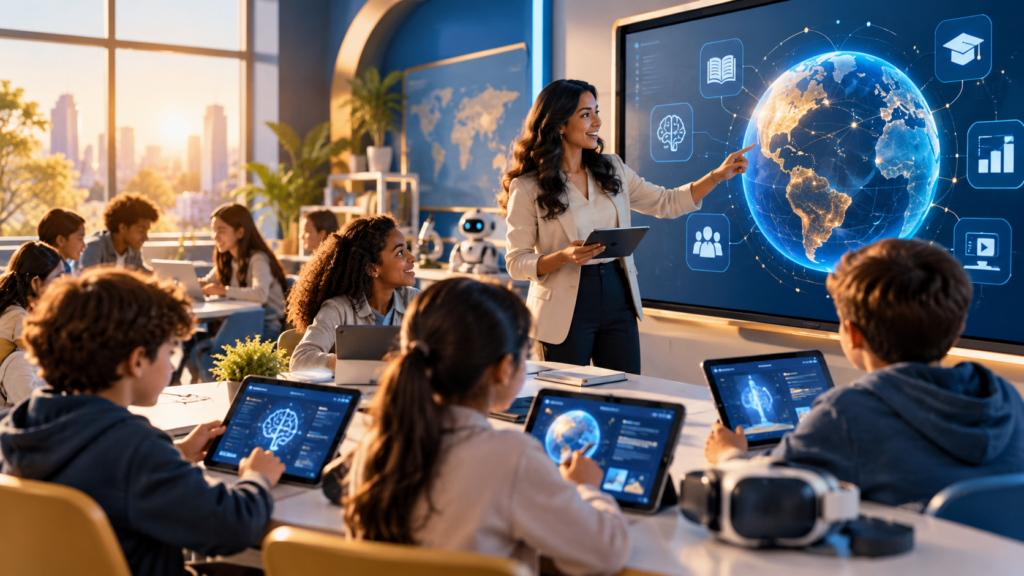
Educational technology, commonly known as EdTech, is expanding the possibilities of classroom learning across India.
From digital teaching materials to interactive assessments, educational institutions are exploring tools that support students, educators, and school administrators.
Although adoption varies between institutions, EdTech can play a valuable role when it addresses real educational needs.
Here are five ways technology is influencing classroom experiences.
1. Making Lessons More Interactive
Digital displays, multimedia presentations, simulations, and educational videos allow teachers to explain concepts through different formats.
A science lesson may become easier to understand through animation, while a geography lesson may benefit from interactive maps and visual explanations.
These resources can encourage participation and help students connect abstract ideas with practical examples.
The strongest results come when educators combine digital content with discussion, questioning, and hands-on activities.
2. Supporting Personalised Learning
Students often need different levels of practice and support.
Adaptive learning platforms can help teachers provide activities suited to individual learning requirements.
Online quizzes and assessment dashboards may reveal topics that students find challenging.
With this information, educators can adjust lessons, offer additional support, and monitor improvement.
Personalisation is most effective when technology supplements teacher judgement rather than replacing it.
3. Expanding Access to Educational Resources
Digital libraries, recorded lessons, and online learning platforms can increase access to educational content.
Students may revisit explanations outside classroom hours, while teachers can explore resources from different institutions.
Some platforms also provide downloadable materials and mobile-friendly content.
However, schools must consider connectivity, language preferences, device availability, and accessibility before relying heavily on digital delivery.
4. Improving Assessment and Feedback
Traditional assessments often require substantial time for checking and feedback.
Digital assessment tools can automate certain routine processes, organise results, and help teachers identify learning patterns.
Quick feedback may help students recognise mistakes and practise difficult concepts while the material is still fresh.
Schools should nevertheless use a balanced assessment approach that also evaluates creativity, reasoning, communication, and practical application.
5. Encouraging Collaboration Beyond the Classroom
Digital collaboration platforms allow students to work together on presentations, research, and creative projects.
Teachers can use shared learning environments to communicate instructions and support group activities.
Some collaborative projects may also connect students with peers or educators from other regions.
These experiences can develop teamwork, digital confidence, and communication skills.
Challenges That Schools Must Address
EdTech is not without limitations.
Financial constraints, teacher training requirements, privacy concerns, and unequal internet access can affect implementation.
Schools should prioritise student safety, practical usefulness, and accessible design when selecting technology solutions.
Starting with a clear learning need and a small pilot can help institutions avoid unnecessary spending.
The Future of EdTech in India
Technology has the potential to make classrooms more engaging, flexible, and responsive.
Its value depends on how effectively institutions integrate it into teaching and learning.
Global Education Fest brings together educators and innovators who can exchange ideas about responsible digital transformation.
For Indian schools, the most promising approach is to treat EdTech as a tool for better education—not as a replacement for the relationships, guidance, and expertise that make learning meaningful.