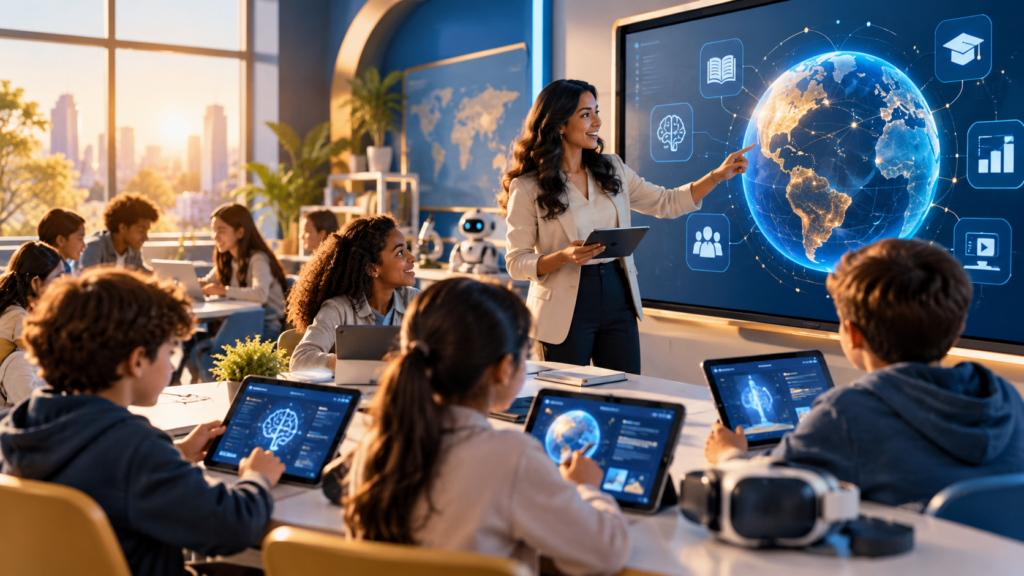
Technology is changing the way teachers teach, students learn, and educational institutions deliver meaningful learning experiences. From interactive smart boards to artificial intelligence and digital learning platforms, modern classrooms are becoming more connected, flexible, and engaging.
However, successful digital transformation is not simply about introducing new devices. It is about creating better learning outcomes and ensuring that technology supports educators and students alike.
The Evolution of Digital Classrooms
Traditional classrooms have often relied on textbooks, lectures, and written assessments. Today, technology offers additional ways to explain concepts, encourage participation, and measure student understanding.
Interactive displays, educational videos, digital assignments, and virtual learning environments allow educators to present information in multiple formats.
For students, these tools can make complex subjects easier to understand. For teachers, they offer opportunities to create engaging lessons and provide more personalised support.
Personalised Learning Through Technology
Every student learns differently. Some understand concepts through visual explanations, while others benefit from practical exercises and additional practice.
Digital learning platforms can support different learning speeds by offering adaptive activities, instant feedback, and targeted resources.
Teachers can use this information to identify learning difficulties and adjust their teaching strategies.
Rather than replacing classroom instruction, personalised technology can strengthen the relationship between educators and learners.
Artificial Intelligence in Education
Artificial intelligence is becoming increasingly relevant to education.
AI-powered tools can assist teachers with lesson planning, content development, assessments, and administrative activities.
For students, carefully supervised tools can offer additional explanations, practice questions, and learning support.
However, schools must establish clear guidelines for responsible AI use, data privacy, academic integrity, and human oversight.
Technology should encourage critical thinking rather than reduce students’ ability to solve problems independently.
Improving Collaboration and Communication
Digital classrooms also make communication easier.
Learning management systems can help institutions share resources, assign tasks, and communicate with students.
Collaborative platforms enable students to work on projects, exchange ideas, and participate in discussions beyond physical classrooms.
These experiences can help develop teamwork, communication, and digital literacy skills that are increasingly valuable in higher education and professional environments.
Challenges of Classroom Technology
Despite its benefits, digital education presents challenges.
Unequal access to devices, unreliable internet connections, limited budgets, and insufficient teacher training can prevent institutions from achieving their goals.
Schools must therefore balance innovation with accessibility.
Technology investments should begin with clear educational objectives, practical training, and an understanding of student needs.
Building Classrooms for the Future
The future of education will likely combine traditional teaching strengths with new digital capabilities.
Teachers will remain central to creating supportive learning environments, while technology can help them reach more students and improve instructional flexibility.
Global Education Fest provides a platform for educators, institutional leaders, and technology innovators to exchange ideas about effective educational transformation.
The ultimate goal is not a classroom filled with technology, but a classroom where every student has better opportunities to learn, participate, and succeed.