
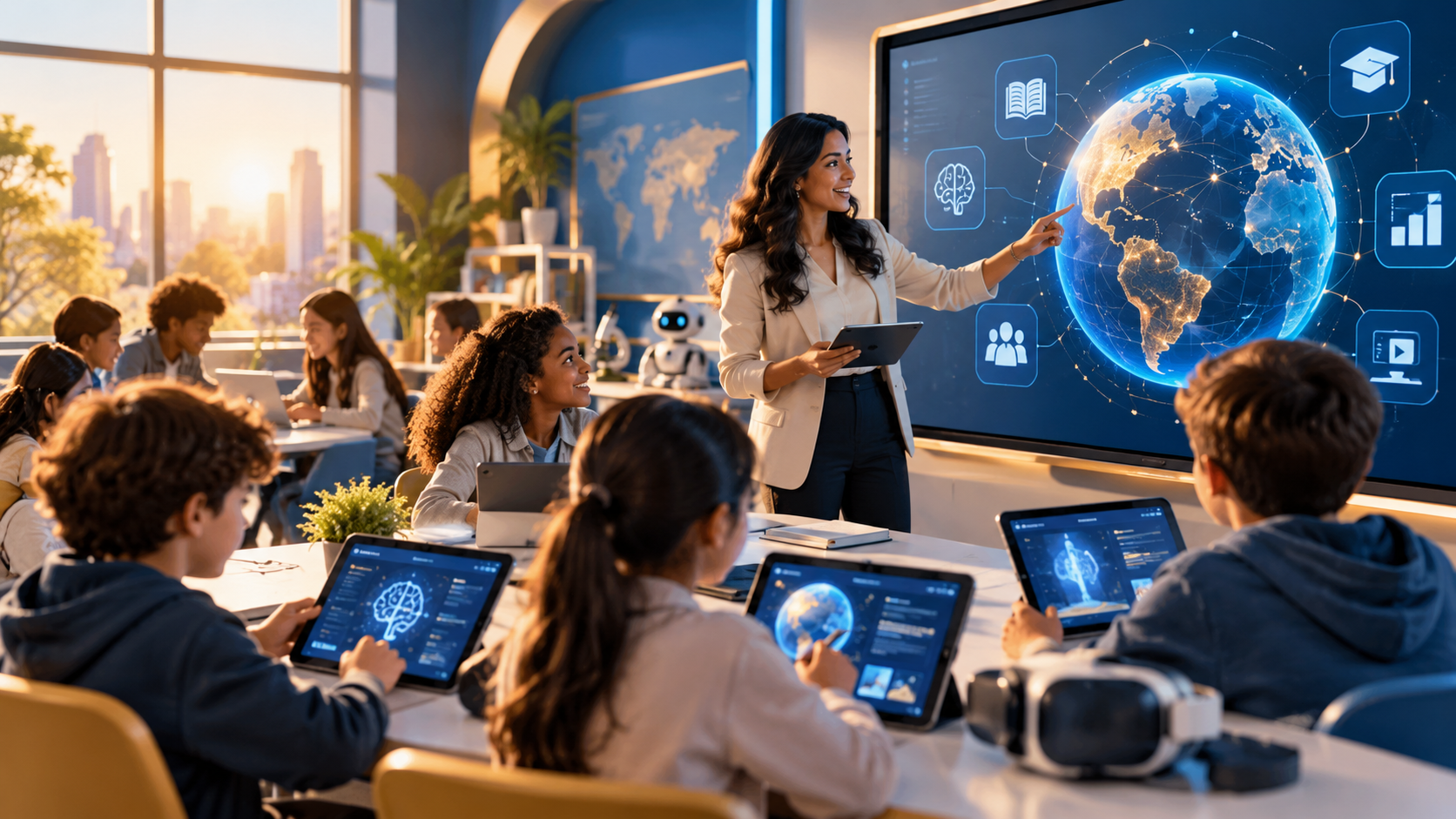
Educational technology is changing how learning can be delivered, supported, and measured. From adaptive learning platforms to virtual classrooms, digital tools offer educators new ways to reach students and personalise instruction.
Yet the most important question is not whether a school uses advanced technology. It is whether that technology helps people teach and learn more effectively.
From Traditional Learning to Personalised Education
In a traditional classroom, students may understand the same lesson at different speeds.
Thoughtfully selected digital platforms can help teachers provide additional practice, varied explanations, and feedback matched to learners’ needs.
Personalisation should not mean leaving students alone with a screen.
Teachers remain essential for interpreting results, encouraging curiosity, and responding to students’ emotional and social needs.
Technology is most effective when it extends a teacher’s capabilities rather than replacing human guidance.
Making Learning More Accessible
Recorded lessons, digital reading materials, captions, translation tools, and accessible interfaces can help students learn in different ways.
Virtual and blended learning models may also widen participation for learners who face geographical or scheduling barriers.
However, access remains uneven.
Devices, internet connectivity, affordability, and digital literacy all determine whether students benefit from these resources.
Institutions should consider mobile-friendly content, downloadable resources, and offline alternatives before making digital participation essential.
The Growing Role of Artificial Intelligence
Artificial intelligence can help educators draft learning resources, organise ideas, and identify patterns in assessment results.
It can also support students through guided practice and feedback.
However, AI-generated information can be inaccurate or unsuitable for particular age groups or curricula.
Schools therefore need clear expectations about academic integrity, privacy, and human review.
Student data should be handled responsibly, and educators should understand how digital platforms collect and process information.
Why Teacher Participation Matters
One common mistake is purchasing software before identifying the classroom problem it should solve.
A stronger approach begins with teachers and learners.
What challenges are slowing down teaching? Where are students struggling? What would successful implementation look like?
Small pilot programmes can test accessibility, curriculum alignment, usability, and support requirements.
Teacher feedback should guide decisions about expanding or modifying technology use.
Evaluating Educational Impact
High platform usage does not automatically mean improved learning.
Institutions should examine whether students participate more confidently, understand concepts more clearly, and receive timely support.
They should also consider teacher workload, cost, accessibility, and student satisfaction.
Responsible EdTech adoption is an ongoing process of evaluation and improvement.
Collaboration Can Shape the Future of EdTech
Educators understand classroom needs, innovators develop potential solutions, and researchers help evaluate results.
Institutional leaders create the conditions for successful implementation.
Global Education Fest provides opportunities for these stakeholders to exchange perspectives and explore partnerships.
The rise of EdTech is ultimately about enabling opportunity.
Its success will be measured not by how advanced a platform appears, but by how effectively it supports inclusive, engaging, and meaningful education.


