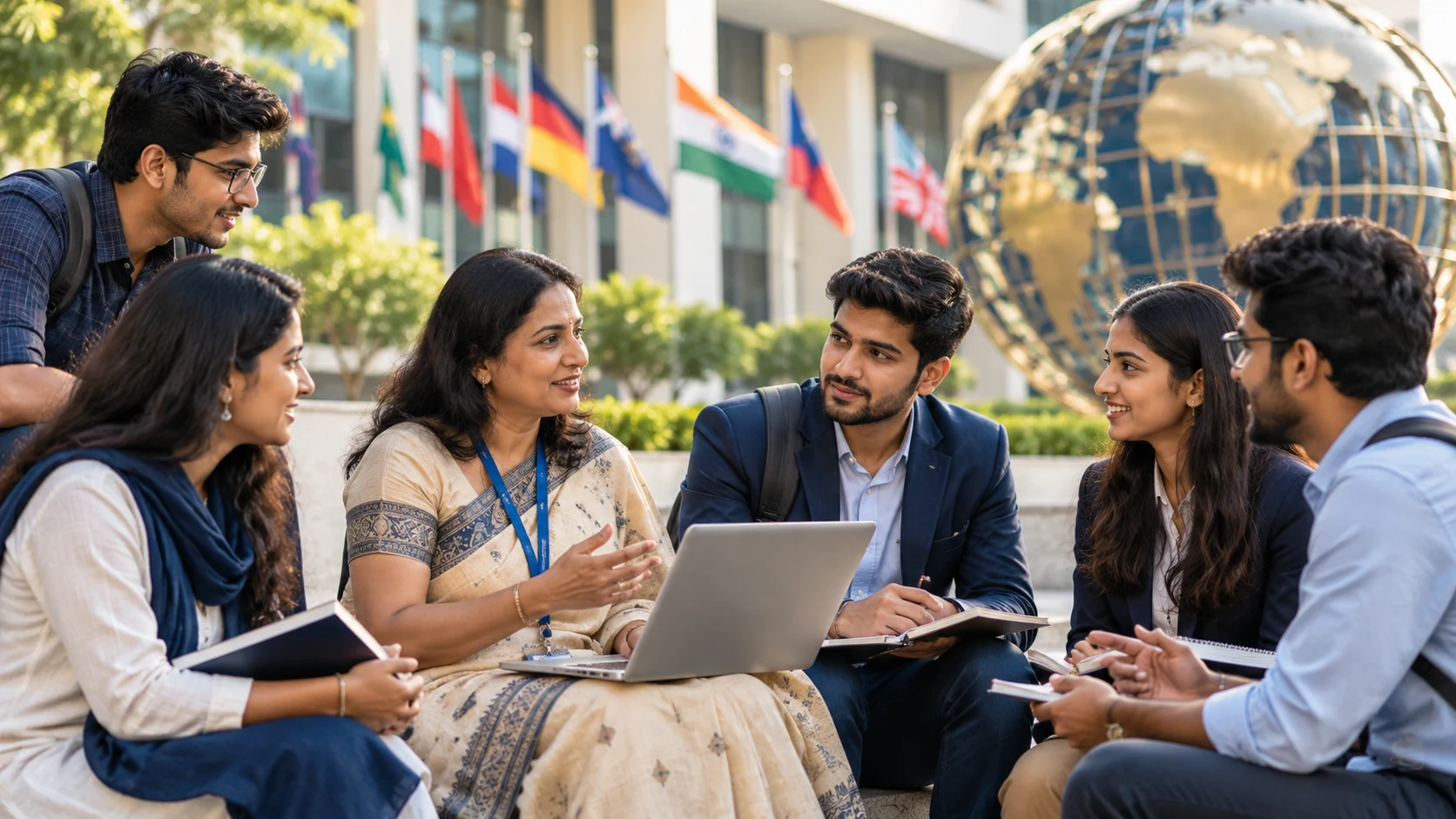
India’s education landscape brings together a large and diverse learner population, established institutions, expanding digital capabilities, and an evolving ecosystem of education professionals and innovators.
These strengths create opportunities for international collaboration, research, skills development, and new approaches to teaching and learning.
Realising that potential, however, requires a continued focus on quality, inclusion, and long-term commitment.
Understanding India’s Diverse Education Ecosystem
India includes schools, colleges, universities, professional institutions, skills providers, and alternative learning pathways serving students with different goals.
This variety creates opportunities for specialised programmes and collaboration across disciplines.
For international partners, understanding this diversity is essential.
An approach suited to an urban university or well-resourced school may not work in a rural institution or another educational environment.
Sustainable partnerships begin with a clear understanding of the learners and institutions involved.
Digital Innovation and Expanding Educational Access
Digital platforms can make educational resources easier to share, support blended learning, and help institutions communicate across distances.
AI-enabled tools and data-informed learning approaches may also help educators identify areas where students need additional support.
However, unequal connectivity, device availability, and digital confidence can limit outcomes.
Digital strategies should therefore consider accessibility, teacher readiness, privacy, and the availability of alternatives for learners with limited connectivity.
Innovation has the greatest value when it reduces barriers rather than creating new ones.
International Partnerships and Knowledge Exchange
Collaboration with institutions abroad can support joint academic projects, professional development, research, and student opportunities.
These partnerships should be built around mutual interests and realistic expectations.
Both partners benefit when responsibilities, resources, timelines, and intended outcomes are discussed openly.
Even a modest pilot programme can help institutions evaluate whether a partnership meets genuine educational needs before expanding it.
Connecting Education with Emerging Skills
Students increasingly need a combination of subject knowledge, communication, digital literacy, adaptability, and practical problem-solving.
Institutions can respond by connecting academic learning with real-world projects, mentorship, and dialogue with employers and community organisations.
Industry involvement should complement education’s broader purpose.
The objective is to prepare students for meaningful participation in professional and social life while encouraging critical thinking and lifelong learning.
Investing in Educators and Educational Quality
Teachers and academic leaders play a central role in converting ambitious plans into effective learning experiences.
Professional development, supportive leadership, access to resources, and peer-learning opportunities can strengthen quality across institutions.
Schools and universities should also evaluate whether new programmes improve student learning and participation.
Relevant indicators may include accessibility, learning progress, student engagement, and feedback from educators and learners.
Positioning India as a Global Education Partner
India’s international education opportunity is not only about attracting attention or expanding educational services.
It is also about building relationships that enable different education systems to learn from one another.
Ethical EdTech development, cross-cultural exchanges, joint research, and institutional collaboration can all support this objective.
Global Education Fest creates space for educators, institutional leaders, and innovators to explore these possibilities.
By focusing on shared challenges, practical initiatives, and long-term outcomes, India’s education community can contribute to a more connected global learning ecosystem.
The opportunity is substantial, but progress will ultimately depend on implementation, better access, stronger teaching, responsible innovation, and partnerships that deliver lasting educational value.